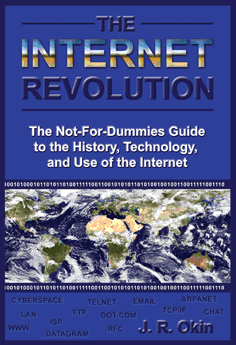
ISBN: 0-9763857-5-9 (Paperback)
ISBN: 0-9763857-6-7 (Hardback)
Pages: 384
Publication Date: June 2005
About the Author
J. R. Okin is a technology consultant who specializes in systems
engineering.
His clients have included AT&T Bell Laboratories, Lucent Technologies,
Unix International, and the Open Software Foundation.
During the dot com boom, Mr. Okin worked as the Director
of Software Engineering and Development at a small Internet
startup in New York City.
He received a bachelor's degree from Vassar College
and a master's degree from Cambridge University, both
in English Literature.
|
The Internet Revolution
presents the complete history of the Internet - from its original
design and engineering to its initial form as the world's
first packet-switched
computer network (the ARPANET) to its transformation into a privatized,
commercial network and its emergence as today's international networking
infrastructure.
This book also presents a detailed explanation of how the Internet's
technology works, why it works so well, how it is being used, and how it
is managed.
It also answers the question of why the Internet succeeded in bringing
computer networking into the lives of so many people across the globe.
The Internet Revolution
explains:
-
How computers evolved, and how they became the instrument of
a revolution.
-
Who designed and built the first computer network, and why it was built.
-
Why computer networking required the invention of a new type
of communication system, and how a computer network differs from
a telephone network.
-
How the Internet was formed, and how it evolved from a private,
experimental network into a public, commercial, global communication
infrastructure.
-
What the Internet consists of, how it works, and how it relates
to the Web.
-
How email was invented, how it works, and the role it played
in transforming the Internet.
-
What cyberspace consists of, how it is used today, and what it
promises for how we will communicate, work, and play tomorrow.
-
How and why the technology and management of the Internet fostered
a revolution, and the strategies for success that made this possible.
|